The 20,000MW Moment: What Dangote’s Announcement Really Means for Nigeria
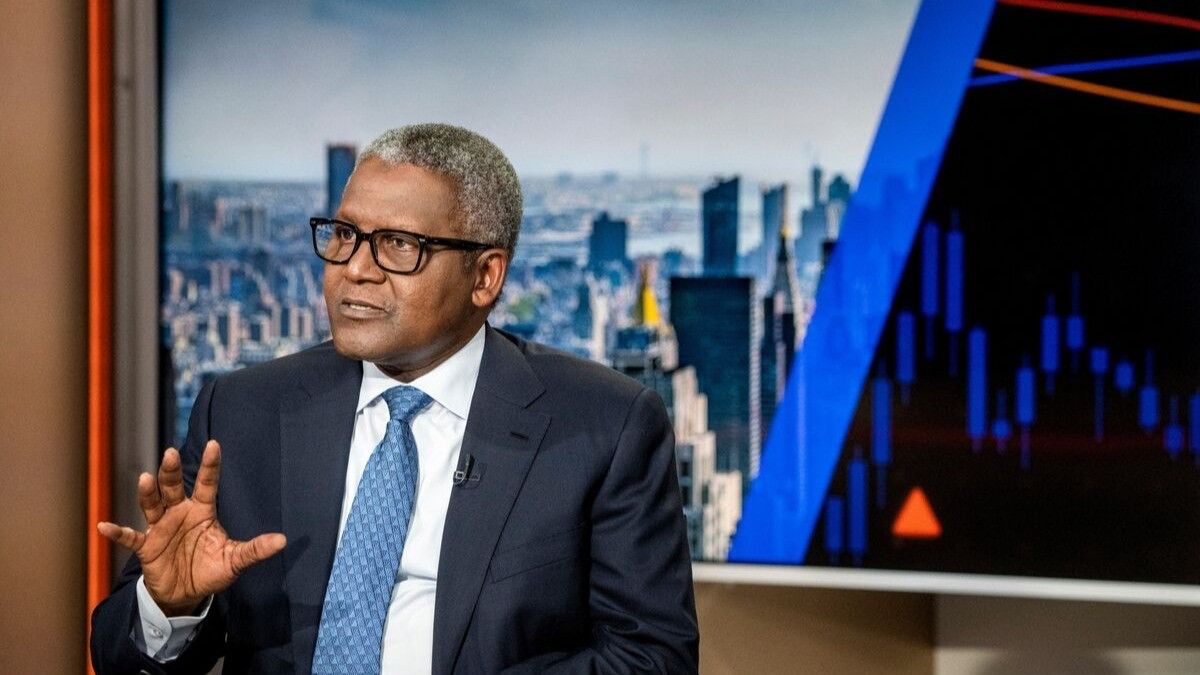
It is an industrialisation story.
For years, the debate about Nigeria’s energy crisis has been conducted in the language of access: households connected, communities electrified, megawatts installed. These matter. But they are not the whole picture. The deeper crisis (and opportunity) is industrial. Nigeria cannot manufacture at scale, compete in global supply chains or retain the economic value of its own resources without reliable, affordable power as a foundation.
Dangote understands this from the inside. His entire industrial empire - refining, cement, fertiliser has been built in spite of the power environment NOT because of it. His move into generation at this scale is vertical integration in its most consequential form. It is also a statement - delivered without fanfare - about where Africa’s most proven private industrialist now sees the binding constraint on the continent’s economic future.
The question his announcement raises is not whether 20,000MW is achievable.
It is what happens and what must be built when it is.
The Component Gap
20,000 megawatts of new generation capacity requires an enormous bill of materials. Solar panels. Inverters. Transformers. Cables. Mounting systems. Switchgear. The full hardware stack of a modern energy infrastructure buildout at a scale Nigeria has never seen.
Where does that equipment come from today? Overwhelmingly, from outside Nigeria. Outside Africa.
Nigeria alone imported ?237 billion worth of solar panels in a single quarter - Q4 2024. The money to build our own infrastructure leaves the country before the infrastructure is even operational. Across Africa, over 80% of the hardware required to build the continent’s energy future is manufactured elsewhere by someone else - capturing the industrial value that should be staying here. A 20,000MW buildout without deliberate localisation strategy embedded from the outset risks deepening that dependency rather than disrupting it. The infrastructure gets built. The factories, the jobs, the technical capability, the export potential - all of that goes elsewhere.
That is the gap.
The gap between building power capacity in Nigeria and building industrial capacity in Nigeria. Between being a consumer of an infrastructure revolution and being a producer of it.
This is not a future problem. Nigeria’s renewable energy sector is already deploying at significant scale - over 131MW of installed solar, 1.6 million household connections and a 5.7GW RESCO pipeline actively in development. The import dependency is not hypothetical. It is the current operating reality of pretty much every project being built today. Structured work is already underway with the Rural Electrification Agency of Nigeria to convert that demand into bankable domestic manufacturing investment. Dangote’s announcement doesn’t change the direction of that work. It dramatically raises the stakes and compresses the time available to get it right.
This gap does not close on its own. It closes through deliberate, coordinated action - because procurement decisions get made early, supply chains get locked in quickly and windows close faster than policy moves. Once import contracts are signed at this scale, they are signed for the lifetime of the project. The demand case for domestic component manufacturing has never been stronger. A 20,000MW pipeline coupled with the deployment currently happening at scale across both the public and private sectors - creates a procurement base large enough to justify Nigerian cable factories, inverter assembly, transformer manufacturing and mounting system fabrication that have never previously been commercially viable.
The market is here. And now. The question is whether Nigerian and African industrial capacity is built to serve it or whether that value flows out of the continent. Again.
The Lesson Europe Is Learning the Hard Way There is an instructive parallel playing out elsewhere.
The European Union built its entire renewable energy transition on Chinese-manufactured technology. Chinese manufacturers now supply over 95% of solar panels used across the EU. In December 2025, the European Commission formally identified reliance on Chinese solar inverters as a high-risk strategic dependency. Europe’s problem was not that it uses Chinese technology. It is that it did so without building any parallel domestic industrial capacity and now finds itself structurally exposed with limited ability to course-correct without enormous cost.
Nigeria’s lesson is not to avoid Chinese technology - that battle is already won at the global manufacturing level. The lesson is to engage on terms that build Nigerian industrial capacity in parallel. Own the assembly, integration, installation and maintenance layers. Use Chinese manufacturing cost advantages to accelerate deployment. But ensure that an increasing share of the value created stays on Nigerian soil - building the industrial base that turns a power project into an economic transformation.
That requires policy with genuine teeth - local content requirements and procurement frameworks built into the investment structure from day one. Not aspirational targets. Enforceable conditions.
The Capital and the Opportunity
Financing 20,000MW requires tens of billions of dollars. And here is what the standard conversation misses: Africa is not capital-poor. It is capital-misallocated. Africa holds over $2.1 trillion in assets under management across pension funds, insurance companies and sovereign wealth funds with over 80% locked in government securities rather than productive infrastructure. Nigeria’s pension assets alone reached ?29.43 trillion in early 2026. That capital needs a home. Structured, bankable 25+GW pipelines - with the right policy environment and investment-grade propositions. That’s exactly the kind of productive home it has been waiting for.
The financing architecture that makes this transformative is one that mobilises African institutional capital alongside international development finance. Not dependency on external funding alone. African capital, building African infrastructure, generating returns for African savers.
What Happens Next Is a Choice
Dangote’s announcement creates a permission structure. It shifts what is considered possible in Nigerian industrialisation. That shift must be met with execution - from the government, from policymakers, from the financial system and from the private sector operators building the industrial infrastructure around it.
The generation capacity will be built. The supply chains will be procured from somewhere. The financing will come from someone. The industrial clusters the power is meant to serve will either develop in Nigeria or they won’t.
None of those outcomes are fixed. All of them are choices and most of them will be made in the next 24 months - not the next decade.
The starting gun has been fired.
Tolu Osekita | Managing Partner, Mente Energy Limited
#Nigeria #Energy #Industrialisation #RELIP #REA #AfricaEnergy #Dangote #Manufacturing #CleanEnergy #Infrastructure
More headlines
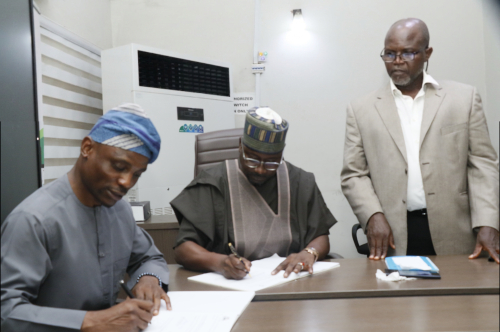
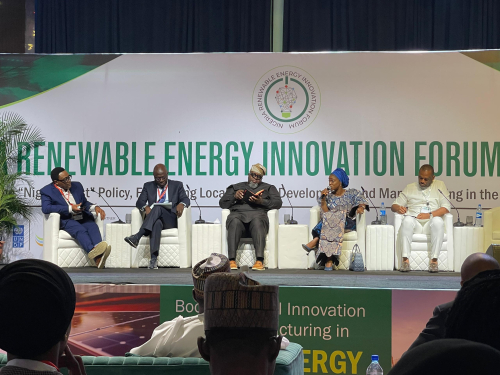
Nigeria’s clean energy future is no longer a promise - it’s being built, right here, by Nigerians.
Mente Energy joined innovators, industry leaders and policymakers at the first Nigerian Renewable...
Read More
Mente Energy Director, Busayo Balogun, Named ESQ Nigerian Legal Awards 40 Under 40 Winner
Anyone who works with Busayo knows this recognition is richly deserved. We are incredibly proud t...
Read More